Why software engineering is getting miserable
Published · 4 min read
- software engineering
- reflection
- purpose of work
- philosophy
Why is software engineering getting miserable, even though AI agents help us get more done every day? A look at what changed in the work itself.

Sanu Krishnan· Founding Product Engineer at Klarent
TL;DR
- Software engineering is getting miserable for a reason that has little to do with output: AI agents now do the hands-on part many engineers enjoyed most, turning a design into working code.
- When code was written by hand, a feature took real time and care. That made it feel valuable, hard to throw away and personal.
- With agents, the work shifts to prototyping several directions, choosing between them and reviewing what the agent wrote, ideally as a stack of small pull requests.
- The code is mostly good, and far more gets done each day. But reviewing someone else's code is rarely the interesting part of the job.
- It's like having Aladdin's genie. When everything is possible, the excitement of building quietly goes away.
A few years ago, building a feature was the fun part of my week. Now, most weeks, software engineering feels like reading someone else’s homework.
That someone is an AI agent. It writes better homework every month, and I get far more done than I used to. And yet the day-to-day work has become a bit miserable. This post is me trying to work out why.
What did software engineering feel like before AI?
Software engineering has always been more than writing code. It’s understanding the problem, choosing a design, making trade-offs, testing, and looking after the result for years.
But before AI agents, a big part of the day was the hands-on bit: turning that design into code yourself. You decided how to structure it, got the details right, and kept it clean enough for the next person to change.
All of that took time. A single feature could hold your attention for days. And because you’d put so much into it, it felt valuable.
That had a side effect: it was hard to throw away. You’d thought about every function and every name. Deleting it felt like deleting a piece of yourself.
It also made the product feel personal. You knew why every part was there, because you’d put it there. Shipping it felt like showing people something you’d made, not something you’d approved.
How does software engineering work with AI agents now?
Now, about 90% of my engineering time at Klarent goes to reviewing code that an AI agent wrote.
A typical feature goes something like this:
- Prototype several directions: different solutions to the same problem, or different ways of presenting the same idea.
- Pick one, or merge the best parts of several.
- Build the front end and back end at the same time, instead of one after the other.
- Ask the agent to split its work into a stack of PRs, so each pull request is small and easy to review.
- Review the stack, one PR at a time.
Exploring several directions like this used to be unthinkable. Nobody had the time. Now a prototype costs almost nothing, so trying a few is quicker than debating which one to build.
The stack of PRs matters more than it sounds. One giant change from an agent is hard to review properly. A stack of small ones, each doing one thing, is something a person can actually read.
Is reviewing AI-written code actually bad?
Not really, and that’s the strange part. Most of the code is good. It usually needs only tiny iterations before it’s ready.
When something bigger is wrong, like the architecture going in the wrong direction, it’s rarely a disaster. Another prompt fixes it. Explain what’s off, and the agent rebuilds that part.
So the problem isn’t quality. If anything, the code is often cleaner than what I’d have written on a tired Thursday afternoon. The problem is what’s left for me to do once the agent has done the rest.
Why does getting more done feel worse?
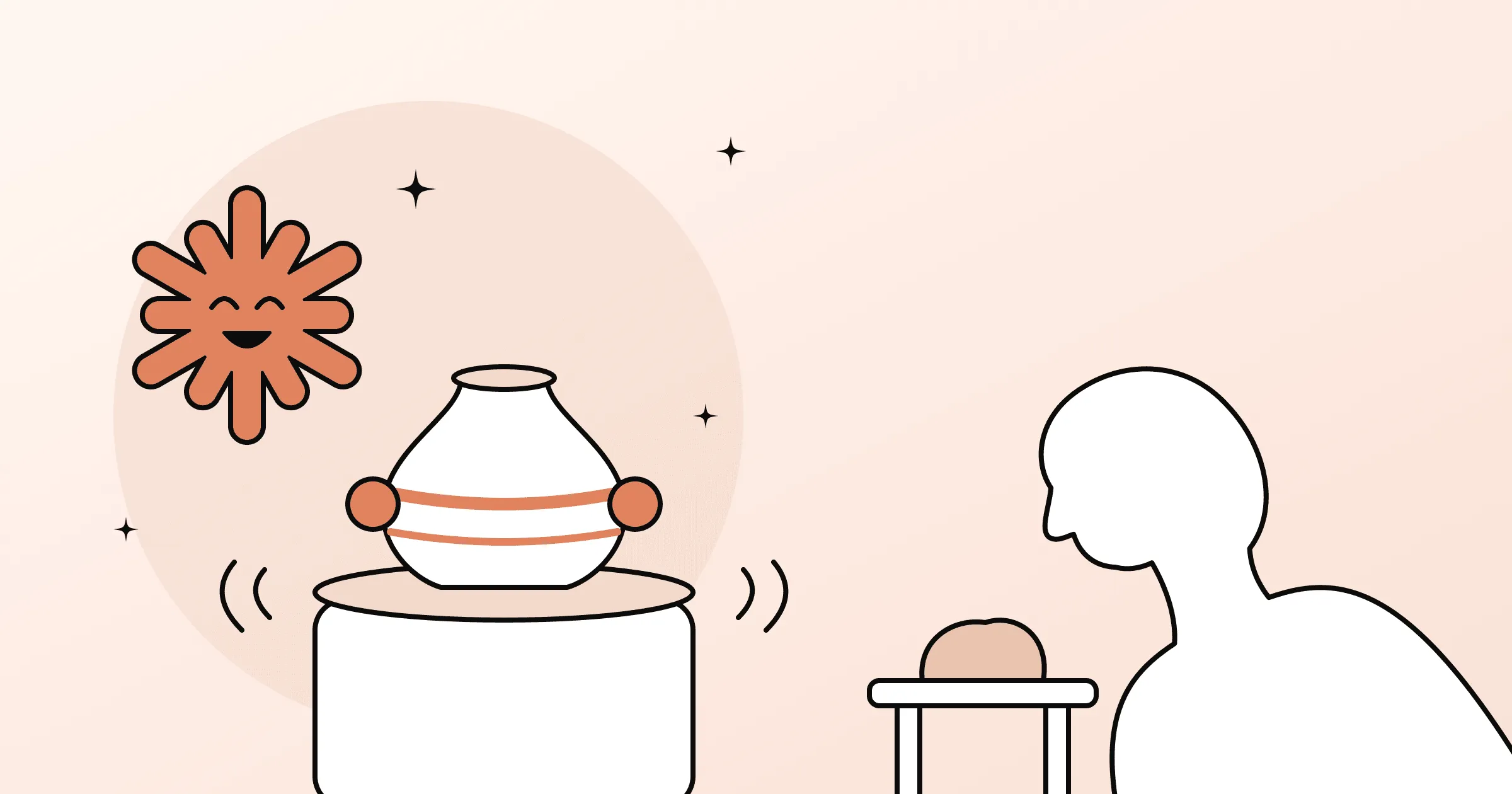
Think of a potter at the wheel. They spin it, shape the clay with their hands, smooth it, scrape it and polish it until a pot slowly appears. Now imagine the same potter says a few magic words, and a finished pot is simply there. It might even be a nicer pot. But the potter never touched the clay, and that was the part they loved.
Software engineering feels a bit like that now. A lot more gets done each day. Features that would have taken a long time now get built, reviewed and shipped much faster. By any productivity measure, this is a great time to be a software engineer.
The engineer still decides what to build and roughly how. But the hands-on part, where an idea slowly became working code under your fingers, is now mostly the agent’s. What’s left is reading, checking and approving. It’s important work. It’s just not the work most of us signed up for.
And with all those prototypes, code has become cheap to throw away. That’s useful for the product, but it also removes the feeling that any one piece is yours. It’s hard to feel attached to one of several prototypes.
What is it like to have a genie that writes your code?
It’s like having Aladdin’s genie. Whatever you ask for, it can do. At first, that’s magic.
After a while, it stops being fun. From an engineering point of view, everything is possible now. The question used to be “can we even build this?”, and figuring out the answer was half the excitement. Now the answer is always yes. The genie just needs a clear enough wish.
In the films, the genie grants three wishes. Ours grants as many as you like, and that turns out to be the catch.
None of this means going back. The speed is real, and I wouldn’t give it up. But it’s worth saying out loud that more output and more fun are not the same thing. AI is also what freed up the time to finally start this blog, so the genie isn’t all bad.
Frequently asked questions
Is AI making software engineering less fun?
For me, yes, even though it makes me far more productive. The agent does the part that used to be satisfying, writing and shaping the code, and leaves me with reviewing it.
How much time do engineers spend reviewing AI-generated code?
I can only speak for myself: about 90% of my engineering time now goes to reviewing code an AI agent wrote. Writing code by hand has become the exception.
Is code written by AI agents good enough to ship?
Most of the code I review is good and needs only tiny changes. When the architecture is off, another prompt usually fixes it. It still needs a careful review before it goes anywhere.
How do you review a large change written by an AI agent?
Ask the agent to split its work into a stack of small pull requests, each building on the one before. Every PR is then small enough to review properly, one at a time.
Why prototype several solutions to the same problem with AI?
Because a prototype costs almost nothing now. Trying a few different solutions, or a few ways of presenting the same idea, and then picking one or merging the best parts is faster than arguing about which one to build.
What is Klarent?
Klarent is an autonomous QA platform for web, iOS and Android apps. You describe a test in plain English, and AI agents write it, run it and fix it when the app changes.