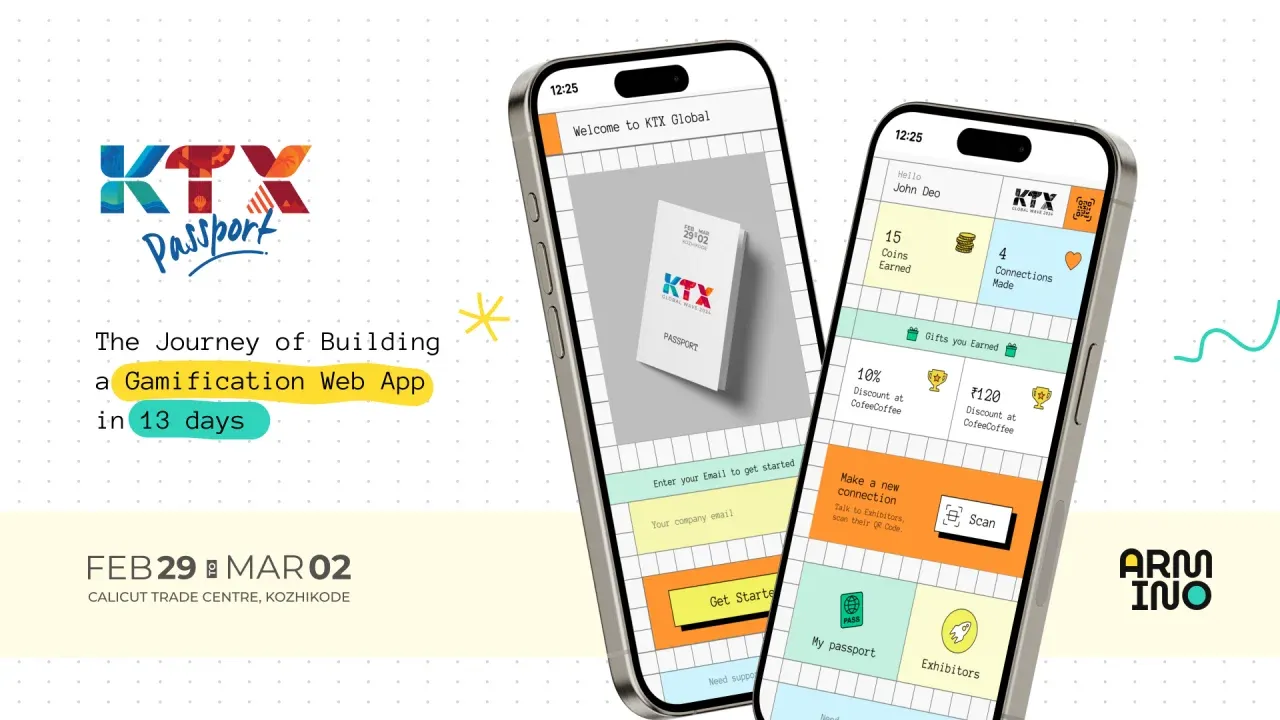
KTX Passport: a networking app built in 13 days
Updated · 3 min read
- web app
- gamification
- ai
KTX Passport turned networking at the KTX Global expo into a game: QR connections, points, gifts and an AI assistant, built by a small team in 13 days.

Sanu Krishnan· Founding Product Engineer at Klarent
TL;DR
- A web app for the KTX Global expo that rewarded exhibitors and delegates for making real connections, with points, gifts and social shares.
- We went from a first call to launch in 13 days, before AI coding tools became popular, with design, build, a round of feedback and two days off in between.
- It had a RAG-based AI assistant for questions about the expo, and a LinkedIn post generator for each new connection.
- Over the three days of the event: 30,000 connections, 2,751 questions to the assistant and 2,400 social media shares.
KTX Passport was a web app that turned networking at KTX Global 2024, a three-day technology expo in Kozhikode, Kerala, India, into a game. Exhibitors and delegates scanned each other’s QR codes, earned points for meaningful connections and shares, and redeemed them for gifts. A small team built it at Armino Technologies in 13 days.
Why we built KTX Passport
It started with a phone call on a Friday evening. Vineesh U S, who works in behaviour science, wanted to run a social experiment at KTX Global: get exhibitors and delegates talking to each other properly, not just collecting brochures.
His idea was a web app that rewarded good connections and social media shares with gifts. We worked out the core features in about 20 minutes. The catch was the date: the event was 13 days away.
I said yes. I believed in the idea and in Vineesh, it was a chance to contribute to KTX, and we like taking on interesting challenges like this at Armino.
How did KTX Passport work?
Every attendee got a digital passport. The day-to-day loop was simple:
- Connect. Scan an exhibitor’s or another delegate’s QR code to make a connection.
- Earn. Connections and social media shares earned points, with more for meaningful connections.
- Redeem. Points unlocked gifts, such as discounts.
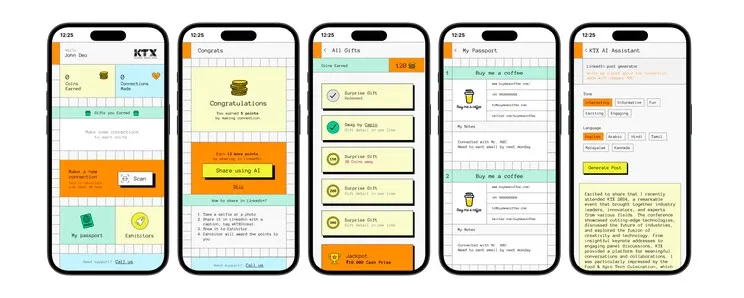
Around that loop sat an exhibitor directory with advanced search, and two AI features built on retrieval-augmented generation (RAG). An assistant answered questions about the expo, events, speakers, delegates and the floor map. A LinkedIn post generator wrote a post about each new connection, with a choice of tone and language.
Thirteen days, roughly
This was before AI coding tools became popular, so there was no agent to hand the boring parts to. We designed and wrote all of it ourselves.
- Days 1–3: design. We started in Figma the next morning and had about 90% of the design locked by day three. We picked a bold look that matched the event, and kept images and icons to a minimum so the app was quick to build and quick to load. We also planned an AI assistant from the start.
- Days 4–7: the build. Habeeb Rahman, a full-stack developer with seven years of experience, joined the build. We made more than 200 commits in three days, then shared a first version with a few exhibitors.
- Days 8–9: a break. We could feel our focus slipping, so we stopped completely for two days.
- Days 10–13: feedback, AI and testing. We reworked the rewards, added delegate-to-delegate connections, made the passport screen look like a real passport, built the AI features, and tested every corner case we could think of.
The hardest bug, for the record, was getting the grid borders to look even. It took a couple of hours.
What came out of it?
KTX Global brought together 120 exhibiting companies. With the help of 20 volunteers who onboarded delegates and supported exhibitors, the app saw 30,000 connections, 2,751 questions to the AI assistant and 2,400 social media shares over the three days.
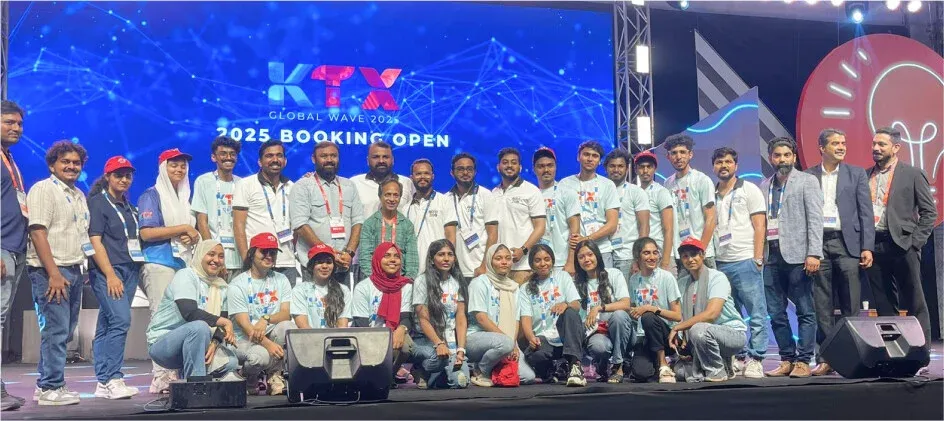
We kept shipping small updates during the event, like announcement banners and bug fixes.
My role
This was a project at Armino Technologies, the company I co-founded. I took the first call, worked out the features with Vineesh, and worked on the design and the build with Habeeb. It was a team effort: Vineesh, Habeeb, Vyshakh Km, the volunteers, the KTX organisers and many others made it happen.
For a very different kind of build, see EBot, my first product. For more about Armino, see the About page.
Frequently asked questions
What was KTX Passport?
A web app for KTX Global, a technology expo in Kozhikode, Kerala, India. Exhibitors and delegates connected by scanning QR codes, earned points for good connections and shares, and redeemed them for gifts.
How long did it take to build?
Thirteen days from the first call to inviting exhibitors, including two days off in the middle. This was before AI coding tools became popular, so we designed and wrote all of it ourselves.
What was KTX Passport built with?
Vue and Tailwind on the front end, Supabase for the database, authentication and security, and a small RAG service on FastAPI for the AI features.
What did the AI features do?
An assistant answered questions about the expo, events, speakers, delegates and the floor map. A post generator wrote a LinkedIn post about each connection, with a choice of tone and language.
How many people used it?
The expo had 120 exhibiting companies. Over its three days, people made 30,000 connections, asked the assistant 2,751 questions and shared on social media 2,400 times.